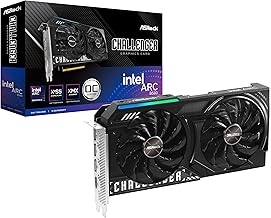
The graphics card market is more diverse than ever, and Intel's Arc series has carved out a compelling niche with its B580 lineup. This GPU tier offers a fantastic balance of performance and value, particularly for gamers targeting 1440p resolution. If you're looking for a comprehensive guide to what the B580 platform offers, you're in the right place. Today, we're putting several popular models head-to-head to help you decide which one fits your build.
The Core Contenders: ASRock, Sparkle, and WEELIAO
At the heart of every B580 card is a capable GPU paired with fast 12GB GDDR6 memory, making it a serious contender for 1440p gaming. The differences lie in the board partner designs, cooling solutions, and factory overclocks.
First up is the ASRock Intel Arc B580 Challenger 12GB OC. This model is built for efficiency and quiet operation. Its dual fan cooling system is designed to provide robust thermal performance while offering a 0dB Silent mode when the GPU is under light loads. With a 2740 MHz GPU clock, it's a great plug-and-play option that delivers solid out-of-the-box performance. For a deeper dive, check out our dedicated ASRock Intel Arc B580 Challenger review.
For users who prioritize maximum cooling and RGB aesthetics, the ASRock Intel Arc B580 Steel Legend 12GB OC steps up with a triple fan array. This not only helps sustain higher boost clocks (up to 2800 MHz) but also does so more quietly under load. The inclusion of Polychrome SYNC allows for seamless RGB integration with other compatible components. Our ASRock Steel Legend review covers its gaming prowess in detail.
Alternative Designs and Cooling Innovations
Sparkle brings its own flair to the B580 arena with the Sparkle Intel Arc B580 Titan OC. This card features the innovative Torn Cooling 2.0 system, which utilizes a large axial fan design to move a significant volume of air. Combined with a sturdy metal backplate and subtle breathing light effects, it presents a premium, minimalist aesthetic. It's a strong example of how board partners differentiate their offerings within the same GPU family.
Another interesting entry is from WEELIAO, with the WEELIAO GUNNIR Intel Arc B580 Index. This model often comes at a competitive price point, offering the core B580 experience with a capable dual-fan cooler. It supports modern outputs like DisplayPort 2.1 and HDMI 2.1, making it ready for high-refresh-rate 1440p gaming or even 4K media consumption.
Performance Considerations and the Role of Cooling
Regardless of which B580 model you choose, maintaining optimal temperatures is key to consistent performance. A well-cooled GPU can sustain higher boost clocks for longer. This is where aftermarket cooling solutions can make a difference. For instance, during a GPU repaste or when building a new system, using a high-quality thermal compound like ARCTIC MX-4 thermal paste can improve heat transfer from the GPU die to the cooler. Our B580 GPU cooling guide walks you through this process.
Furthermore, good case airflow is non-negotiable. Adding a set of high-performance, quiet case fans like the DARKROCK 3-pack 120mm fans can significantly lower overall system temperatures, giving your B580 card cooler air to work with. This is a crucial aspect of DIY PC building that directly impacts component longevity and performance.
How Does the B580 Stack Up Against Alternatives?
The B580's position is interesting when compared to other cards in its price range. For users considering slightly less VRAM, the Sparkle Intel Arc B570 Guardian OC with 10GB GDDR6 presents a compelling alternative, as discussed in our B570 Guardian review. Similarly, the ASRock Intel Arc B570 Challenger offers a similar feature set with a slightly cut-down spec.
On the competitor side, the ASUS Dual Radeon RX 7600 EVO OC is a direct rival, often competing on price. It features Axial-tech fans and is managed through the GPU Tweak III software. The choice between an 8GB Radeon and a 12GB Intel Arc often comes down to specific game optimization, driver maturity, and feature preferences like Intel's XeSS upscaling technology.
For those on a tighter budget, the 8GB Sparkle Intel Arc A580 ORC OC can be considered, though it represents a step down in performance and future-proofing due to its lower VRAM capacity.
Final Verdict: Is a B580 GPU Right for You?
The Intel Arc B580 series stands out as a smart choice for the savvy gamer or creator. The consistent 12GB VRAM buffer across most models is its killer feature, providing ample headroom for high-resolution textures and modern games that are increasingly VRAM-hungry. Whether you choose the quiet efficiency of the ASRock Challenger, the cooling prowess of the Steel Legend or Sparkle Titan, or the value of the WEELIAO Index, you're getting a capable gaming graphics card for the 1440p era.
Before making a decision, we recommend reading our broader Intel Arc B580 gaming guide to understand the platform's strengths. Ultimately, the best B580 for you depends on your budget, case size, noise preferences, and aesthetic desires. Each model we've compared brings something unique to the table, proving that within the B580 ecosystem, there's a perfect card for nearly every type of builder.